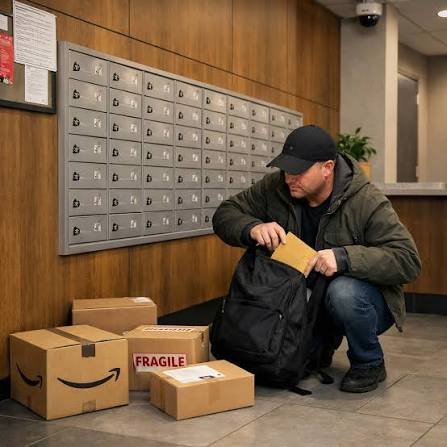
Walk into almost any block of flats in Manchester, Leeds, or London on a weekday afternoon, and you will probably see the same thing: a stack of cardboard boxes leaning against the concierge desk, a few more by the lifts, and a resident sifting through the pile for something with their name on it. Online shopping has become part of everyday life, but most residential buildings were never designed to receive dozens, let alone hundreds, of deliveries a day.
That gap is forcing a rethink. More managing agents and concierge teams are turning to AI-powered parcel management software, replacing the handwritten logbook that used to sit behind the front desk.
Why the Old System Stopped Working
A few years ago, a typical building might take in a handful of parcels a day. The concierge signed for them, put them in a back room, and wrote a line in a book. At that volume, the system held together.
It falls apart as volume climbs. Entries become rushed and hard to read. Parcels get put on whichever shelf has space. Nobody records who collected what or when. During busy periods such as Black Friday or the weeks before Christmas, the back room fills up and the overflow ends up in corridors.
A logbook records that a parcel arrived. It rarely records where it went next.
The Hidden Cost of a Cluttered Lobby
Parcel piles are more than an eyesore. Boxes stacked in corridors and near exits can block escape routes, a real concern for building safety. Staff lose hours each week searching for items, answering “has my parcel come?” queries, and dealing with frustrated residents.
Liability is also a concern. When a parcel goes missing and no one can clearly say who handled it, building management often ends up absorbing the complaint, and sometimes the cost.
What a Digital Process Actually Looks Like
The change is less dramatic than it sounds. When a courier drops off a delivery, staff scan the label with a phone or tablet. The system matches it to a resident, records the time, and logs where staff store the parcel. The resident gets an instant email or text notification. When they come to collect it, staff confirm the handover with a signature or photo.
Each step leaves a timestamped record, which is the key difference. Instead of relying on memory or a scrawled note, everyone can see exactly what happened to a parcel from arrival to collection.
| Paper Logbook | Digital Parcel Tracking | |
| Recording arrivals | Handwritten, often rushed | Scanned in seconds |
| Finding a parcel | Search the storeroom | Logged shelf or locker location |
| Telling residents | Notes under doors or no notice | Automatic email or text alerts |
| Proof of collection | Signature, if remembered | Signature or photo, timestamped |
| Resolving disputes | Guesswork | Full audit trail |
| Peak periods | Backlogs and overflow | Same process, higher volume |
Notifications Change Resident Behaviour
One of the quieter benefits of going digital is how quickly parcels leave the building. When residents are notified the moment something arrives, they tend to collect it the same day rather than whenever they next happen to pass the desk. Automated reminders for uncollected items keep storerooms from slowly filling with forgotten boxes.
That faster turnover matters most in buildings with limited storage. The space has not grown, but it is being emptied more often.
Making Storage Space Work Harder
Buildings that handle volume well tend to organize storage into clear zones: standard shelving, oversized items, and, increasingly, chilled storage for grocery and meal kit deliveries. Some add smart lockers so residents can collect outside staffed hours.
When every shelf or locker has a location code tied to the tracking system, staff no longer need to remember where things are. A new team member can find a parcel as quickly as someone who has worked the desk for years.
Build-to-Rent and Student Housing Are Leading the Way
The build-to-rent sector has quickly adopted digital parcel handling, largely because operators see it as part of the resident experience. In a market where residents compare amenities, gyms, and co-working spaces, a smooth delivery process is one more reason to stay.
In build-to-rent, residents a for a reliable parcel experience.
Purpose-built student accommodation faces an even sharper version of the problem. The start of term brings a flood of deliveries in a matter of days, from bedding to textbooks to electronics. Halls that rely on paper systems often struggle through September, while those using tracking tools can process the surge without turning reception into a warehouse.
Getting the Rollout Right
Technology alone does not fix the problem. Buildings that make the switch successfully tend to do a few things well:
They train all front desk staff, including weekend and night cover, so the process stays consistent. They ensure resident contact details are accurate before going live, since notifications only work if they reach the right person. They tell residents what is changing and how collection will work. And they plan ahead for peak season rather than waiting for the first November backlog to expose the gaps.
Where This Leaves UK Buildings
The parcel boom is not a temporary spike. Online shopping, grocery deliveries, and subscription boxes have settled into a steady, high volume that residential buildings now have to treat as a core part of daily operations, much like cleaning, security, or maintenance.
The buildings coping best are not necessarily the ones with the biggest storerooms. They are the ones that know exactly what has arrived, where it is, who it belongs to, and when it left. For managing agents, concierge teams, and residents alike, that visibility is turning a daily headache into something that simply works.